Side B Coffee
An AI-assisted brand identity, designed live for Pratt Institute's Digital Marketing Program. A short experiment on using taste to steer Lovart and ChatGPT through logo, identity, and derived applications.
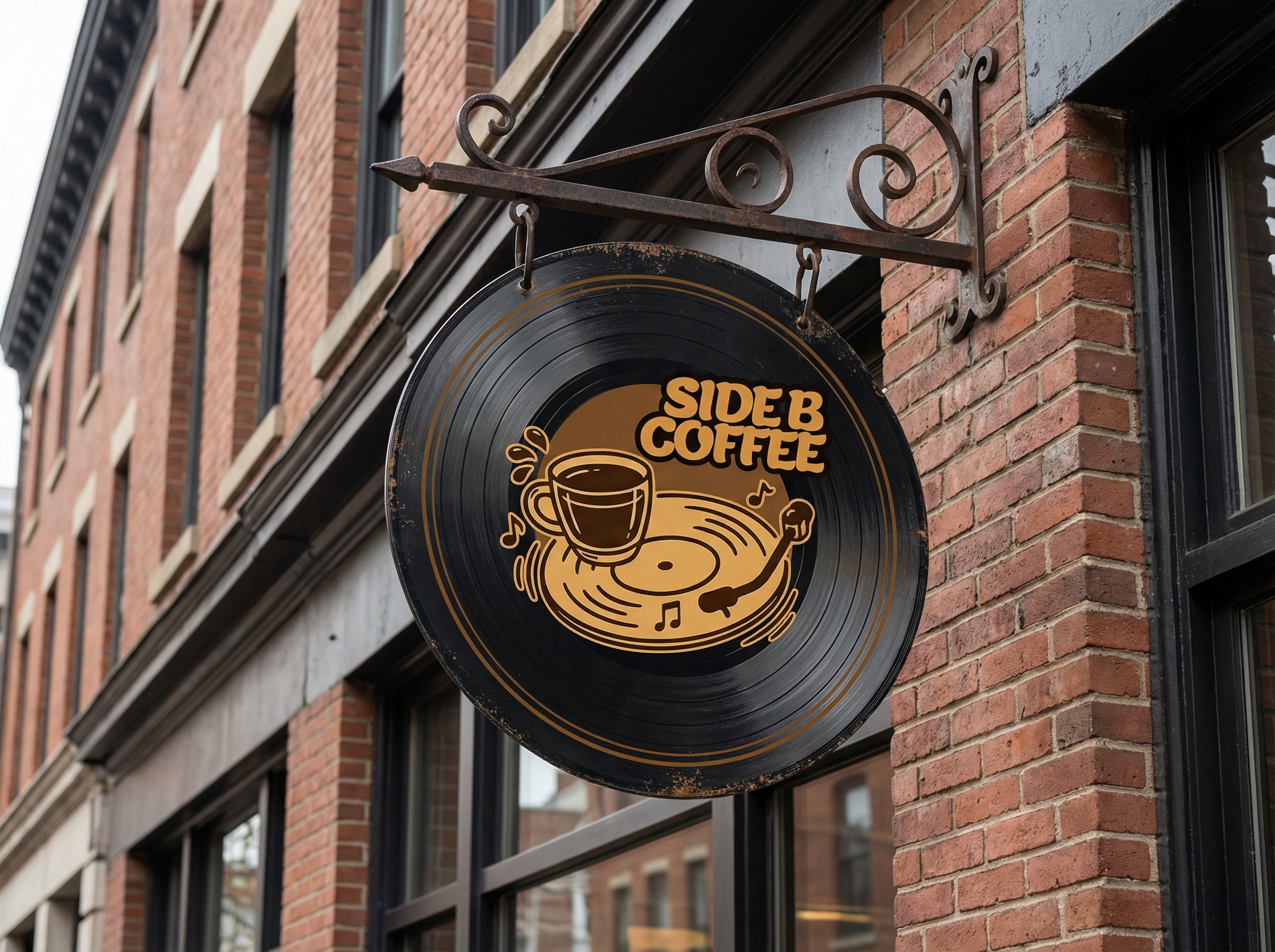
Invited to give a guest lecture for Pratt Institute's Digital Marketing Program, I walked students through how I used Lovart to build a brand identity system for a conceptual coffee shop, and more importantly, the thinking that made the tool work.
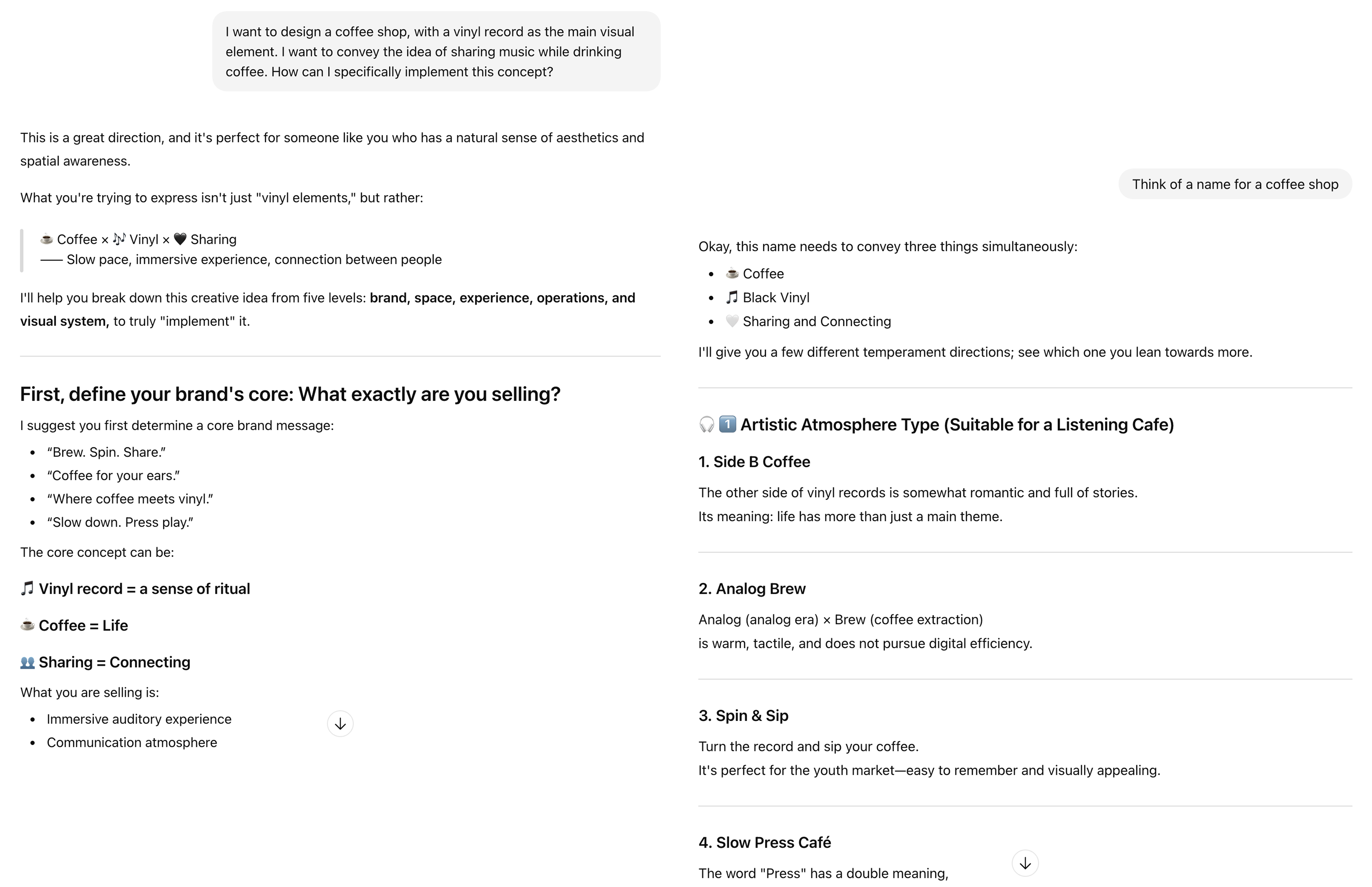
The concept: a coffee shop where vinyl records serve as the main visual element, expressing the idea of sharing music while sharing coffee. ChatGPT helped expand the concept and suggested the name Side B Coffee. I passed a selection of ideas to Lovart as context, aiming for a brand that felt community-oriented, warm, elegant, and lively.
Three stages of the process
- Core logo design: find a visual anchor that carries the concept.
- Brand identity system: extend the anchor into typography, color, and rules.
- Derived applications: signage, merchandise, menus, promotional graphics.
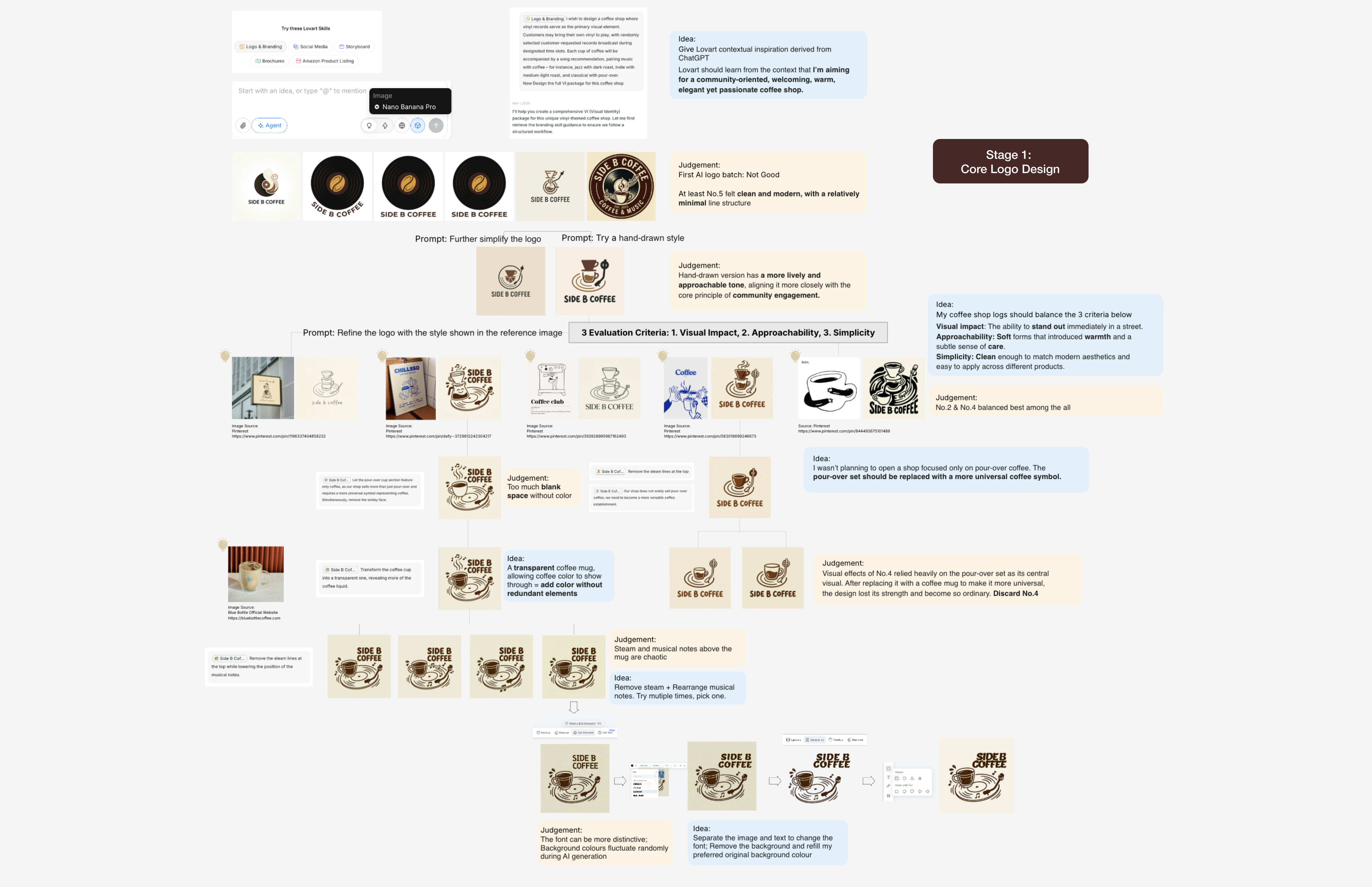
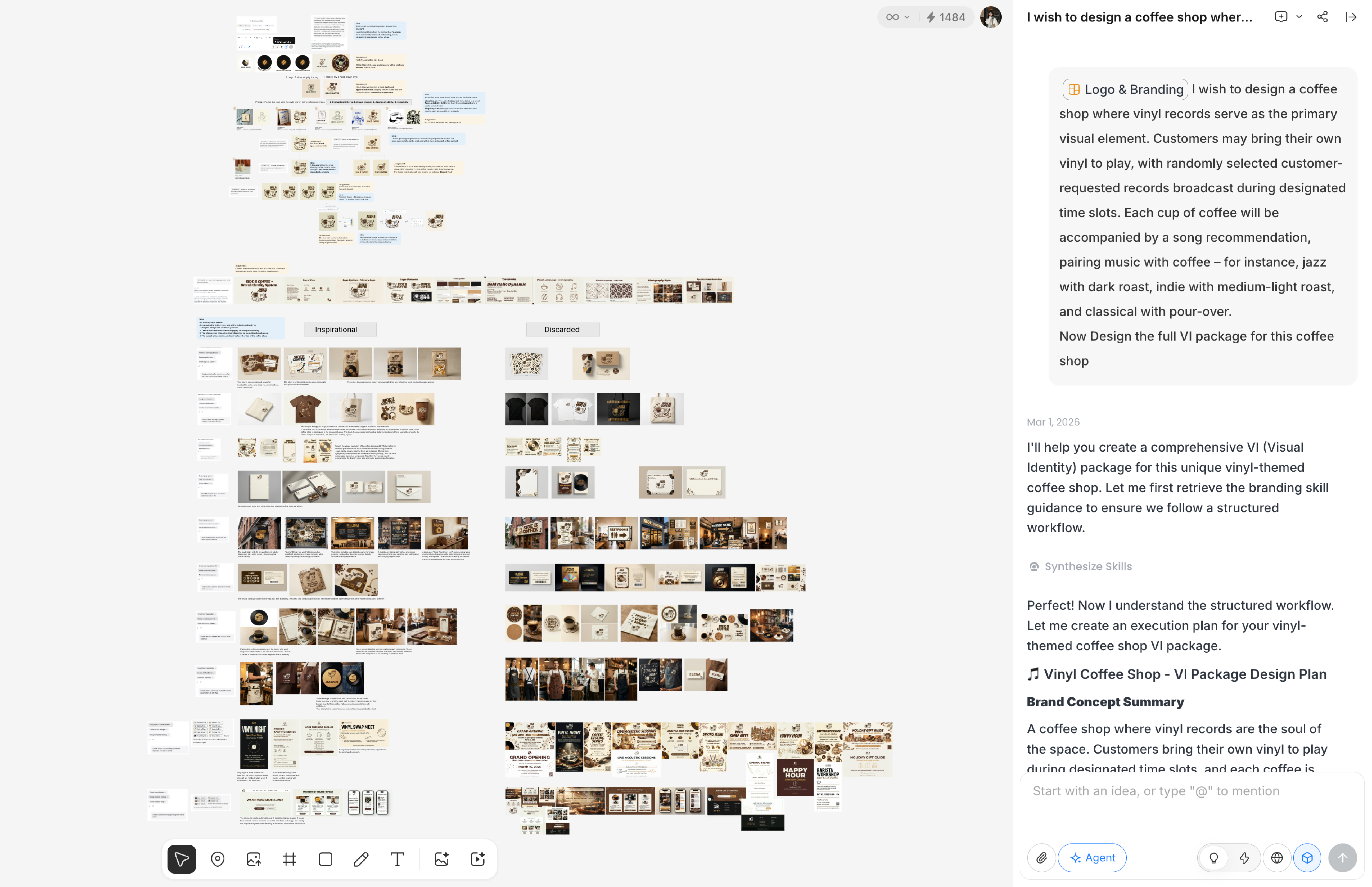
The first batch of logos was not good. One option showed potential with a clean, minimal line style, so I used it as a starting point and refined it further with a playful, hand-drawn approach. At that point, text prompts were no longer enough to describe stylistic nuances, so I switched to reference images.
Logo selection criteria
- Visual impact: stand out immediately on the street.
- Approachability: soft, warm, a sense of care.
- Simplicity: clean enough to apply across products.
Once the logo direction was confirmed, Lovart generated a 10-page brand identity system in about two minutes, with surprisingly strong consistency across typography, color, and layout. From there I moved into derived applications.
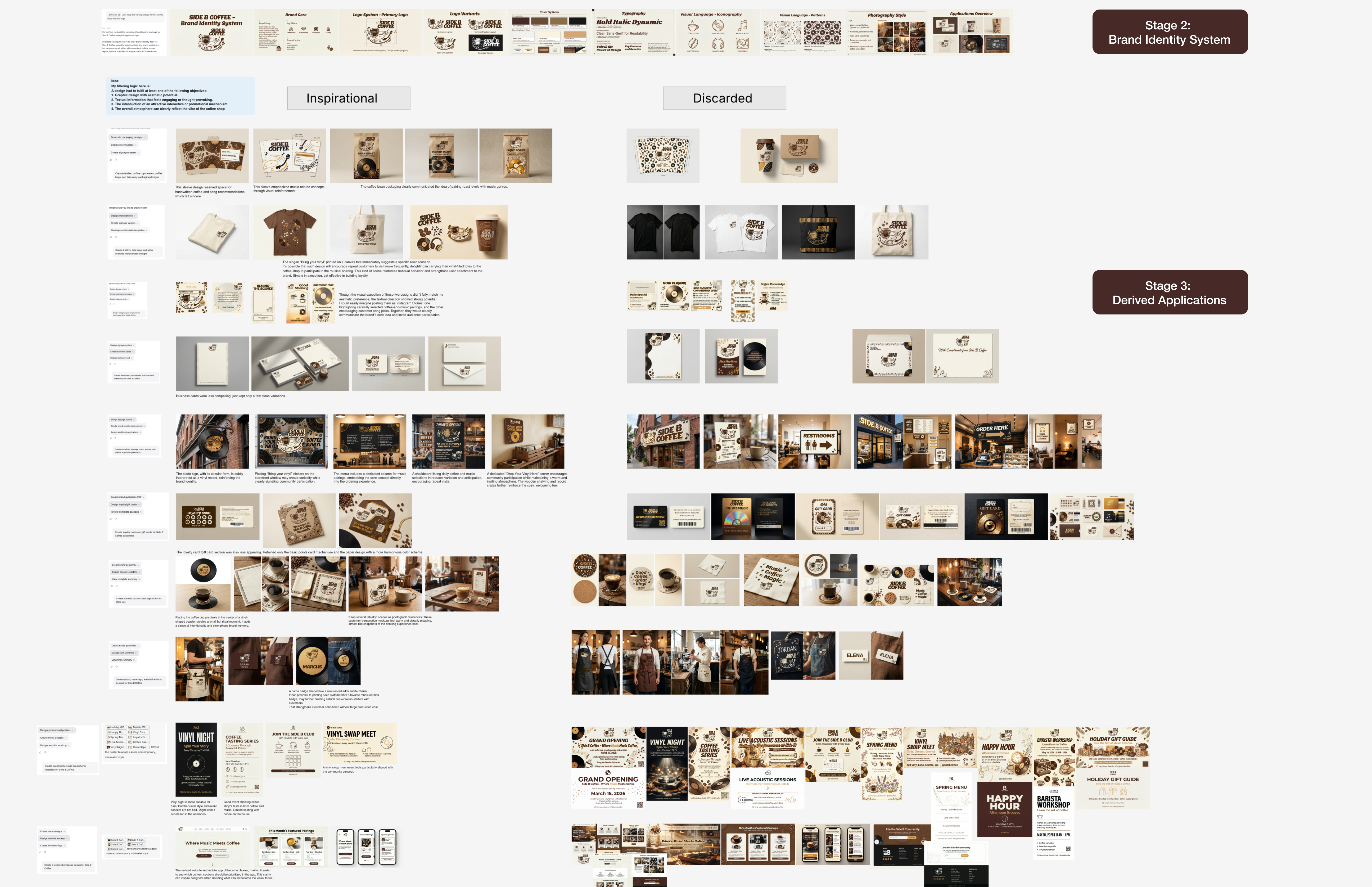
Not every generated application worked. To sort them, I built a simple filtering system: designs that met my criteria moved to the left; the rest went right.
A design had to meet at least one of the following.
Application filtering criteria
- Graphic design with aesthetic potential.
- Engaging or thought-provoking text.
- An attractive interactive or promotional mechanism.
- An overall atmosphere that clearly reflects the shop's vibe.
On taste as the new craft
The final VI package was still far from mature commercial use, but remarkably effective for idea exploration. In creative content generation, AI enables speed, scale, and rapid iteration. What matters most is not how many visuals are generated. It is how well they inspire you, and how well you judge the results.
AI lowers production barriers and accelerates output. In this context, taste becomes more valuable than ever. AI is a tool. The user's taste determines its capabilities and its limits.
Designer & Guest Lecturer
Wanling Yu
Invited by
Diana Lee (Pratt Institute)
Kevin Tseng (Atomrock)
Hosted by
Pratt Institute
Digital Marketing Program
Year
2026